

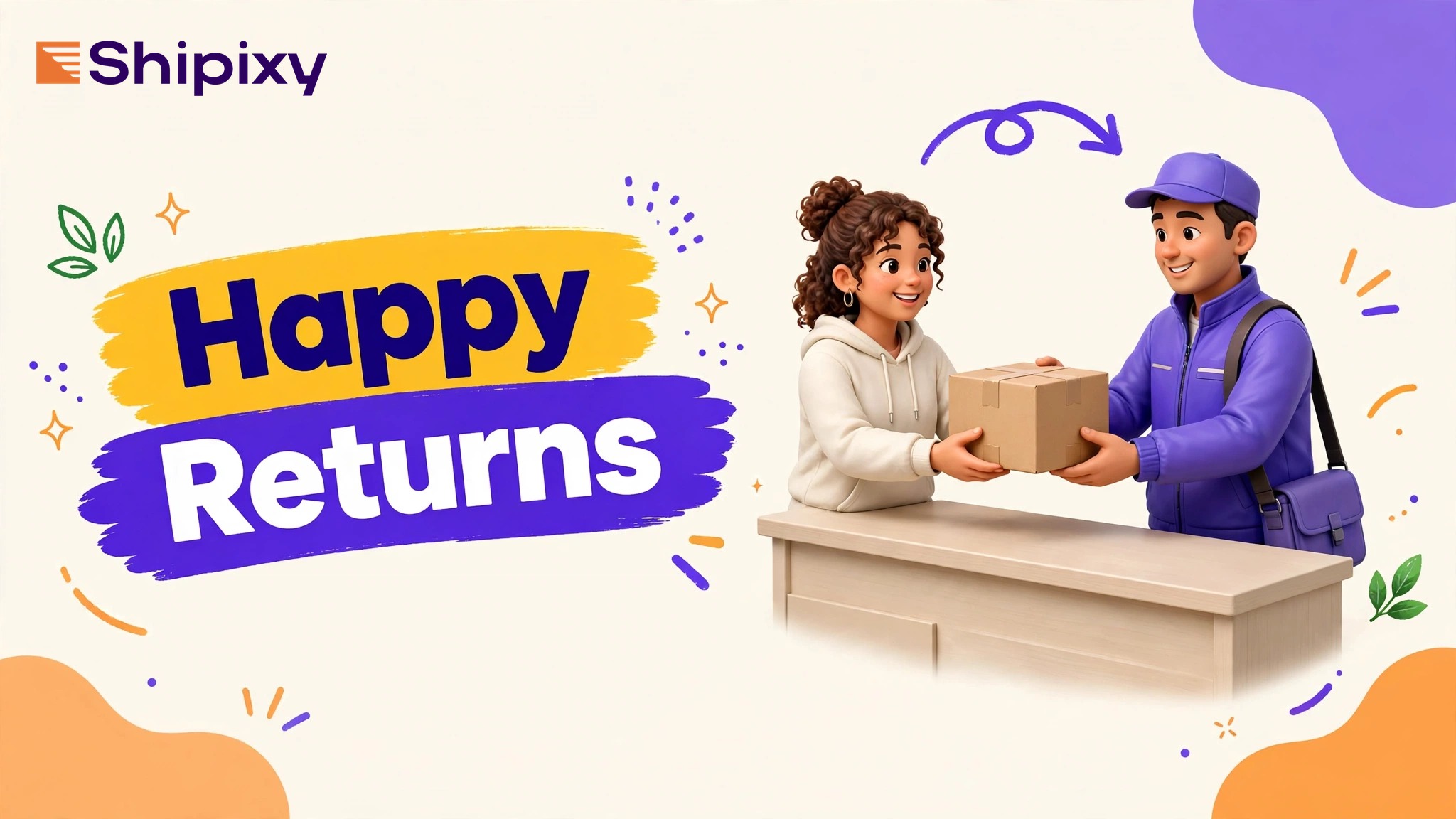



Online retailers and customers can get frustrated with returns. Customers want a convenient method of returning items to the business, and businesses want to manage returns, processing costs, fraud, refunds, and inventory. Happy Returns solves these issues with returns software and a physical Return Bar network which handles box-free and label-free drop-offs.
Its system can also handle refunds, exchanges, tracking returns, verifying products, and reverse logistics. However, the ease of use does not necessarily mean it is the best returns platform for all businesses. The experience may be impacted by location coverage, product eligibility, fees, integrations, customer support, and pricing. In this guide, we'll highlight the pros and cons of Happy Returns, how it works, its core features, pricing model, fees, and some alternatives.
What Does Happy Returns Mean?
Happy Returns is the returns management and reverse logistics solution for eCommerce retailers. It is a blend of online returns software and Return Bar stores where qualified buyers can drop off items without a box or printed shipping label.
Customers can start a return online, get a QR code and present it at one of the participating points. The item is then verified and merged with any other returns and sent back to the merchant's return program.
Advantages of Happy Returns
The primary benefits of Happy Returns are the simplified experience for customers with returns, box-free and label-free drop-offs, quicker initiation of refunds or exchanges, return consolidation, item verification, and software integrations. These features can minimize the effort required by the customer and provide retailers with greater control over their reverse logistics process.
Box-Free and Label-Free Returns
Happy Returns' feature that makes it so great is its Return Bar model. Participating shoppers can bring their items directly to a participating location without having to create a shipping box or print a return label. This can simplify the return process over traditional mail-back returns.
Provide Multiple Return Drop-Off Sites
According to Happy Returns, the company has established a large U.S. Return Bar network with nearly 10,000 locations, comprising a significant number of the UPS Store locations. But real availability will still be determined by the retailer, return method, and retail location.
Faster Refunds and Exchanges
Once the return is accepted and verified, Happy Returns may generate refunds or exchanges. This can shorten the time to return, as compared to a return that has to go back to a warehouse for processing to start. This will vary according to the retailer's return policy and settings.
Return Consolidation
Happy Returns can combine items that have been returned to them before shipping to merchants. This provides an easier reverse logistics process for retailers and can reduce some transportation and handling expenses.
Item Verification and Fraud Controls
Happy Returns uses item scanning and verification on drop-off, as well as risk-scoring and other fraud prevention features. This provides retailers with an additional control if refunds are issued prior to the goods being returned to their facility.
Return and Exchange Software
The platform is more than just a drop-off network. It has a return portal for merchants and allows them to set up returns, refunds, exchanges, fees, and other return process details.
Multiple Return Methods
Happy Returns can handle more than Return Bar drop-offs. It has been documented that it can be returned through Return Bars, to the retailer's store, or by mail on a prepaid label. This provides a chance for stores to provide alternate options depending on the product, the location, or the return policy.
Disadvantages of Happy Returns
Happy Returns' drawbacks include the requirement for retailers to integrate and set up the service, location-based restrictions, potentially customized pricing, eligibility restrictions, and processing fees depending on the configuration. It works best if the retailer has sufficient volume to return goods and customers are easy to access supported returns.
Location Coverage Can Vary
Not all shoppers have a convenient location if there's a large Return Bar network. Customers who wish for more stores to participate or see fewer stores in certain areas.
Incomplete Price Transparency
Currently, Happy Returns doesn't offer a simple public plan structure that works for all merchants. Its current setup takes retailers to its salespeople, and the cost may vary depending on the services and specifications requested.
Processing Fees May Apply
There is no single shopper fee for Happy Returns for all returns. It claims that a processing fee can be set according to the return method and location, and that the store could let Happy Returns handle this or do it in their own system. There are also some configurations where fees can be avoided.
Not All Products Return the Same Way
Box-free drop-off is useful, but not all products and returns apply to all types of box-free drop-off. There are various means of return for goods that require special packaging, handling, inspection, or shipping.
Retailers Setup Matters
Happy Returns must interface with the retailer's return and order systems. Depending on the configuration, it might require API integrations, platform integrations, 3PL connections, or other technical requirements.
Some Users Report Return Support Issues
Some customers show positive feedback on ease of use and convenience, and problems with handling defective items, customer support, and return visibility. These are user reports and not proof that all retailers will have this problem.
How Does Happy Returns Work?
In most cases, happy returns involve a physical or mail-based return process that is matched with an online return request.
- Customer initiates the return: The customer accesses the retailer's return system and chooses from the available return options.
- Return method is provided: If a Return Bar is available, the customer receives a QR code and nearby place information.
- Item is dropped off: The customer picks up the eligible product without a box or printed label at the designated Return Bar.
- Item is verified: The return can be scanned and verified at the drop-off location.
- The refund or exchange begins: The store's workflow can begin the exchange or refund.
- Returns are combined: If items are eligible for return, they can be combined with other returns and sent to Happy Returns' reverse logistics network.
- Retailer receives the returns: Products are sorted and sent back to the retailer or its designated processing site.
Conclusion
Happy Returns unifies returns software, Return Bar drop-offs, item verification, refunds and exchanges, and reverse logistics consolidation into one returns management model. One of its greatest benefits is making eligible returns easier, particularly those made without a box and with no labels.
But before selecting a platform, companies should also consider location coverage, product eligibility, processing fees, integrations, customer support, and custom pricing. While it can be helpful for retailers who desire a formalized physical and digital returns experience, it is important to remember that the correct solution can vary by merchant's product, return volume, customer, and operational needs.


