

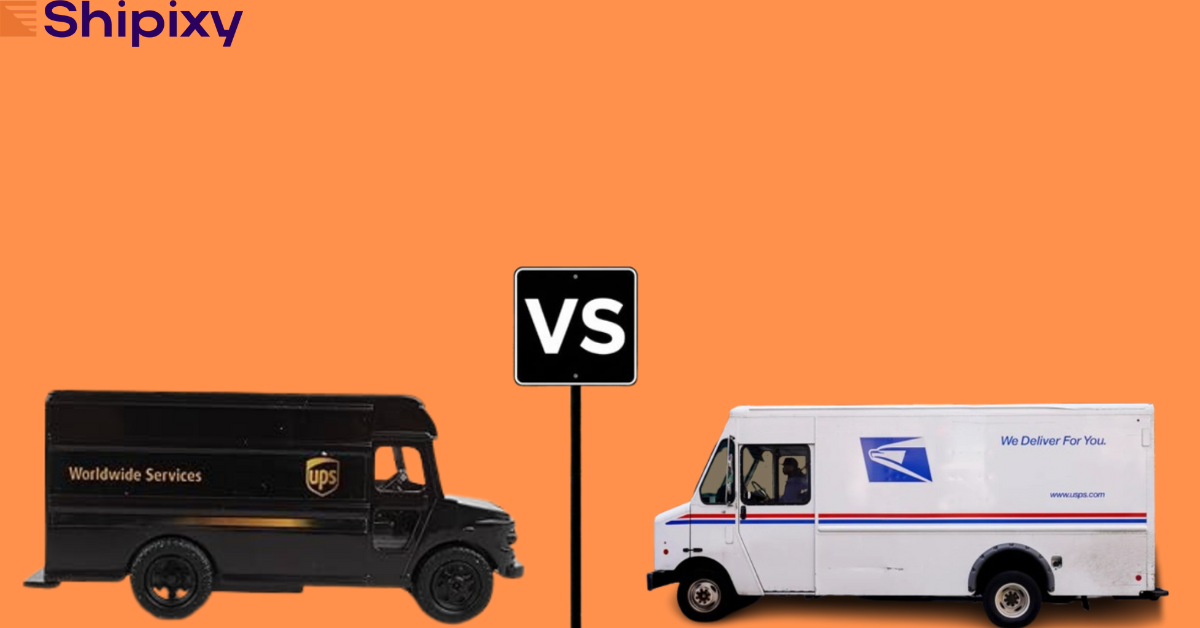



The Selection of the correct shipping carrier is one of the most critical choices that an online product seller can make. One delay, a lost package, or an expensive freight can have a direct impact on customer confidence and profit margins. In 2026, the decision between UPS and USPS remains one of the most popular questions that people ask when sending packages in the United States or abroad. Both carriers are trusted and used widely, have a variety of shipping services, but they are used for very different purposes. The key comparison depends on price, speed, shipping services, and destination.
USPS tends to be more favorable when dealing with small and lightweight packages and domestic freight, whereas UPS tends to be more preferable when heavy packages are involved, time restrictions, and for international shipping. Shipping rates, however, may vary according to weight, distance, and the type of services. This is where Shipixy helps. In this guide, we will do a detailed UPS vs USPS comparison in 2026, including their services, prices, speed, benefits, drawbacks, and which carrier is the best solution for various shipping needs.
Overview of UPS vs USPS
It is necessary to know what USPS and UPS are, how they work, and what kind of customers they serve before comparing the features and costs.
United Parcel Service (UPS)
UPS is a global logistics company that is privately owned and was established in 1907 in Atlanta, Georgia. UPS has developed over the years to become one of the largest package delivery and supply chain businesses in the world. It primarily deals with commercial shipping, high-volume delivery, and international logistics.
UPS operates in over 220 countries and territories, and it delivers millions of packages every day. A major strength of UPS is that it can transport large and heavy packages, and the maximum weight of one package is 150 pounds. This makes UPS a good choice among companies that deal with heavy packages, electronics, or industrial products.
The other outstanding benefit of UPS is its upgraded tracking system. Customers get in-depth tracking information, delivery time frames, and live delivery tracking. Guaranteed delivery is also offered by UPS, thus making it a carrier of choice when a shipment is urgent or time sensitive.
United States Postal Service (USPS)
The USPS is a postal service run by the government and has been in operation doing business in the United States since 1775. Its main business is to deliver mail and packages to all addresses in the country, including rural and remote addresses.
USPS is associated with low cost, particularly when it comes to small and light packages. It serves more than 165 million addresses in the U.S., including P.O. boxes, which are not served by other carriers such as UPS. This national coverage presents a rare competitive edge to USPS in domestic postage.
USPS also provides flat-rate shipping with the option of sending items at a constant price regardless of the distance, provided that the item fits in the given box. Even with free packaging materials and no residential surcharge, USPS is still a favorite among individuals, small businesses, and startups.
Which is Best Suited For?
UPS excels in international coverage, consistency, and shipment monitoring, and thus it is a powerful choice in companies with more frequent or international shipping. USPS is unique due to its cheap, daily delivery in the United States, particularly to small packages.
Comparison of UPS and USPS Shipping Services
Shipping services are different in speed, price, and purpose. The following is a comparison between UPS and USPS.
UPS Shipping Services
- UPS Ground: fast delivery within 1-5 business days within the country.
- UPS Next Day Air: Provide guaranteed overnight delivery.
- UPS 2nd Day Air: Offers shipment in two days.
- UPS Worldwide Express: Express service to any destination worldwide with good tracking.
UPS shipping services are useful when there is an urgency, and the shipment size is big and time-sensitive.
USPS Shipping Services
- USPS Ground Advantage: Cost-effective delivery of approximately 2-5 business days.
- Priority Mail: 1-3 days delivery and flat-rate pricing.
- Priority Mail Express: Overnight delivery in most locations.
- First-Class Mail: Cheapest when the packages are extremely small.
Ideal to use with low budgets, lightweight packages, and flat-rate delivery.
Which Carrier Should You Choose Based on Shipping Service?
UPS focuses on speed and guaranteed delivery as well as overseas services. It offers low-cost with flat-rate convenience and comprehensive tracking. Small items can be priced easily using USPS flat-rate boxes. For universal U.S. coverage, you can choose USPS.
Price Comparison of UPS and USPS
Price is a very important consideration among small and medium businesses when selecting a shipping carrier. The differences between UPS and USPS rates can be used to determine the best carrier that provides the best price to a business owner, depending on the kind of shipping required.
When is USPS Cheaper?
- For Light domestic packages, particularly less than 5 lbs.
- Flat rate boxes where the cost remains the same, no matter the distance.
- Sending small envelopes or daily packages.
- Flat-rate prices are simple to predict.
When is UPS Cheaper?
- For Heavy or oversized packages.
- High volume or large quantity shipment where there are volume discounts.
- Guaranteed delivery services such as Next Day Air.
- Shipments across countries, including customized support.
Which One Should You Choose?
USPS is more cost-effective and reliable in terms of most lightweight domestic packages. UPS can be expensive at first, but for heavier, urgent, or international freight, the total value is usually improved upon, particularly when delivery time and tracking are critical factors.
Pros and Cons of UPS and USPS
Knowing the strengths and limitations is the best way to select the carrier that is most suitable for your needs.
UPS Pros
- Very good tracking and delivery updates.
- Good international networks that are globally covered
- Several guaranteed delivery speeds.
- Most economical when shipping heavy products and large volumes.
UPS Cons
- Higher fundamental prices on small packages.
- Other charges might be used.
- Certain services are much higher in price than those of USPS.
USPS Pros
- Inexpensive when it comes to small and ordinary deliveries.
- Flat-rate plans help to reduce pricing.
- Mails to every U.S. address and P.O. box.
- Most services do not have residential surcharges.
USPS Cons
- Tracking is not as comprehensive as UPS.
- The international tracking and delivery times are restricted.
- Fewer deliveries per day in large and long-distance deliveries.
Final Choice?
UPS comes in perfect when it comes to dependability, speed, and business requirements. USPS is best when it comes to cheap, convenient, and small package shipments.
Which is Faster: UPS or USPS?
UPS
- Offers insured delivery schedules with services such as Next Day Air.
- Regular international shipping schedules.
- Tracking enables the customers to know precisely when they will receive their delivery.
USPS
- Priority Mail is delivered in 1-3 days within the country.
- In most regions, Priority Mail Express delivers overnight.
- Times for delivery may be a little different depending on volume and local delivery.
Speed Comparison to Decide Which One is Faster?
- In small domestic packages, USPS Priority Mail can be very fast.
- UPS offers better timing and guarantees opportunities.
- UPS tends to be the most favourable option in the case of time-sensitive priority delivery. USPS is powerful in terms of economic speed.
Which is cheaper: UPS or USPS?
Cheapest for Small Packages
USPS tends to be the cheapest for small and lightweight objects. It is affordable due to its flat rate packages and easy pricing, particularly when it comes to packages that are below a specific weight.
Less Expensive with Bulky or Heavy Purchases
When Heavy packages, bulk shipments, and overseas destination pricing are considered after volume discounts, UPS is frequently more affordable. UPS also provides discount business shipping rates that are not provided by USPS.
Cost Comparison Conclusion
USPS is usually cheaper, in case you want to keep shipping costs at the lowest possible rate on small shipments. When you have to transport heavier goods or when shipping large quantities of goods, UPS might be more affordable.
Which Shipping Carrier is Best for Your eCommerce Businesses?
UPS for eCommerce
UPS works well with online businesses that require:
- Powerful global shipment facilities.
- Quick delivery services.
- Daily monitoring that is reliable for the customers.
- Supporters of bulky or heavy products.
- Business tools such as customer pickup, returns, and account management.
USPS for eCommerce
USPS is appropriate for the eCommerce stores that require:
- Affordable daily shipping.
- Constant pricing that makes cost models simple.
- Lightweight orders with simple and reliable domestic delivery.
- Rural and remote delivery to the U.S.
FAQs
- Is it possible to transport fragile goods using USPS or UPS?
The fragile items are processed by both USPS and UPS, though the packaging requirements vary. UPS provides premium packages and insurance services on delicate or expensive packages. USPS also accepts fragile packages, but may not have a lot of insurance coverage as UPS.
- Which carrier is better for weekend or holiday deliveries?
UPS offers weekend delivery service in some locations and on selected services such as the UPS Next Day Air. USPS does not typically deliver on Sundays, though in some areas, it delivers Priority Mail Express. Selecting UPS would provide additional capacity when shipping last-minute holiday gifts.
- Does USPS have size limitations compared to UPS?
USPS places restrictions on packages by weight and size in the form of a flat rate. UPS can transport bigger sizes, as large as 150 pounds, and has dimension requirements. In the situation of oversized goods, UPS is often the more reasonable option.
- How do USPS and UPS handle package tracking and notifications?
UPS offers more specific real-time tracking statistics, such as delivery windows and exceptions. USPS also has a tracking option that is less detailed and slower to update. UPS is mostly chosen in those businesses where visibility is a priority.
- Is it possible to use a USPS and UPS shipping service for the same eCommerce store?
Yes, USPS and UPS can serve the same store, and it is possible to select either of them according to the package size, the destination, and the costs. Our platform enables easy carrier integration with numerous carriers. This guarantees flexibility and the best shipping rates on each order.


