To ship baked goods, pick sturdy treats, wrap each one, pack snugly with cushioning, and ship fast, early in the week.
Cookies, brownies and loaf cakes can ship at room temperature. Frosted, cream-filled or chocolate-covered treats need freezing, an insulated box and a coolant. USPS treats food as perishable matter: you can mail it at your own risk when it is packed properly and can arrive before it spoils.
Which baked goods ship well?
Dense, dry, sturdy baked goods ship best; anything soft, cream-filled or heavily decorated is a poor candidate.
| Ship well | Need extra care | Avoid shipping |
|---|---|---|
| Drop cookies, shortbread, biscotti, brownies, blondies and bars | Frosted or decorated cookies (freeze them first) | Cream-filled pastries |
| Muffins, scones and quick breads such as pecan loaves | Iced cupcakes and decorated cakes | Anything made with fresh cream |
| Loaf cakes, coffee cakes and bundt cakes; unfrosted cakes | Pies and specialty desserts (frozen, rigid container) | Highly delicate desserts |
| Bread, cooled completely | Chocolate-covered treats in warm weather | Thin, crumbly cookies and jam-filled cookies |
If a baked good freezes well, it usually ships well too.
How do you pack baked goods for shipping?
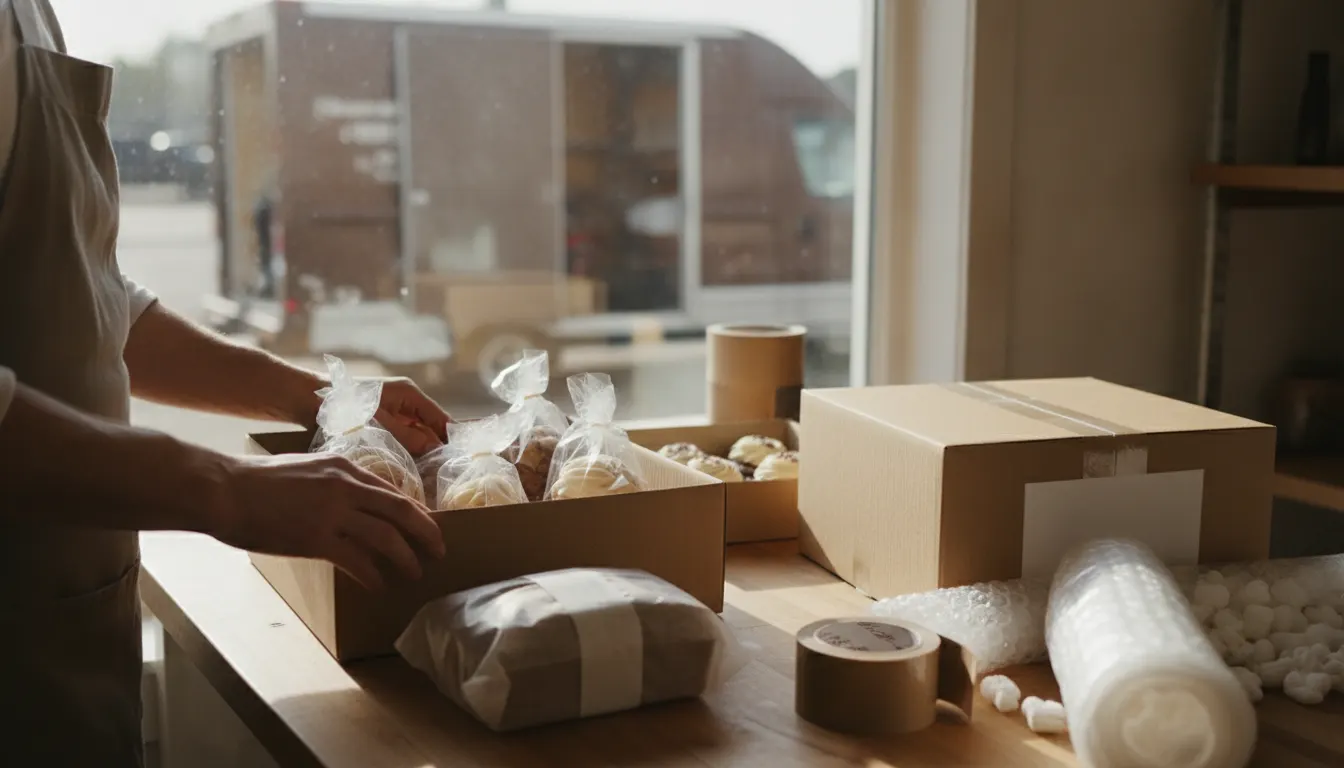
Cool, wrap, contain, cushion and seal: each layer protects against crumbs, moisture and impact.
- Cool completely. FedEx notes that a full cool-down reduces moisture buildup in transit; warm bread traps condensation and softens the crust.
- Freeze if you can. Freezing helps baked goods hold their shape, and they thaw on the way. FedEx recommends freezing frosted or decorated cookies.
- Wrap each item. Use food-safe bags, plastic wrap or parchment. Sort by flavor and texture so strong flavors do not rub off on the rest.
- Use a rigid inner container. A bakery box, tin or rigid container that fits snugly, with a partition so items do not touch.
- Cushion all sides. FedEx recommends 2 to 3 inches of cushioning, such as bubble wrap or padded paper, on every side. Avoid packing materials that dissolve in water.
- Fill the gaps and test. Fill empty space in the outer corrugated box, then shake gently: nothing should move.
- Seal and label. Mark the box "Perishable" so the recipient opens it right away, put a copy of the label inside, and keep barcodes clear.
More general box and taping rules are in our packaging guidelines and tips.
How do you ship cookies without breaking them?
Ship chewy, dense cookies or bars, pack them in pairs, and fill the tin so nothing can shift.
- Save crumbly, melt-in-the-mouth cookies for local sales; skip jam or cream fillings and heavy sprinkles, which go soggy or break.
- Glazed or sugar-dusted cookies travel fine once they are completely dry.
- Wrap cookies back to back in pairs in plastic wrap, or use zip bags, and keep aromatic flavors such as chocolate or peppermint apart.
- Put crumpled parchment, bubble wrap or crinkle-cut paper in the bottom of the tin, place the larger, heavier cookies first and the smaller ones on top, with wax or parchment paper between layers.
- Use a tin or box only slightly larger than the cookies and fill the remaining space with the same cushioning.
FedEx says cookies can ship at room temperature, refrigerated or frozen.
Do you need ice packs or dry ice to ship baked goods?
Most cookies, bars and breads do not; frosted cakes, cupcakes, pies and cream-based treats do.
- Insulated box: FedEx recommends a foam container with walls at least 1-1/2 inches thick, inside a sturdy corrugated outer box.
- Coolant: gel packs keep items between 34°F and 50°F; dry ice keeps them frozen. Dry ice is regulated as dangerous goods, so follow the carrier's dry ice rules.
- Moisture: double-bag anything that can melt or thaw in watertight plastic bags of at least 2 mil.
- Cupcakes and cakes: use liners or clamshells for cupcakes and a cake box for cakes, add supports so icing does not touch the packaging, and freeze before packing.
- Timing: if you do not use a next-day service, FedEx says the packaging and coolant should protect the food for at least 24 hours beyond the delivery commitment.
Which carrier service is best for shipping baked goods?
Use the fastest service you can afford: overnight for perishable treats, two to three days for sturdy cookies and breads.
- FedEx: its baking guide names FedEx First Overnight, Priority Overnight, Standard Overnight and 2Day as the fast options, and advises shipping Monday to Wednesday to avoid weekend delays.
- USPS Priority Mail: delivery in 2 to 3 days, with USPS Tracking and up to $100 of insurance with most shipments. USPS says perishable foods that decompose easily or cannot arrive without spoiling are not mailable.
- USPS Ground Advantage: 2 to 5 days, which is only suitable for the sturdiest, longest-lasting goods.
Check the weather at both ends: in heat, rethink chocolate-covered or cream-filled treats. Around the holidays, ship well before the holiday shipping deadlines.
Can you ship baked goods internationally?
Sometimes, but rules depend on the destination country, and carriers discourage consumers from trying.
FedEx says that if you are a consumer, it does not recommend shipping baked goods internationally; businesses should check the prohibited and restricted items lists and temperature-controlled options. In international mail, USPS does not accept items that decompose easily or cannot be expected to arrive without spoiling. Sturdy, long-lasting items such as biscotti and shortbread are the safest choice, and you must declare food on the customs form. The same packing rules apply as for packing and shipping coffee and other food gifts.
Shipping baked goods for your business? Shipixy gives discounted UPS, FedEx and USPS rates of up to 75% with no subscription fees. Compare overnight and two-day prices in the Shipping Calculator or read more e-commerce shipping guides.
Sources
All sources were checked on October 25, 2026. Carriers change their rules and prices; the official pages below always win.